Pope Saint Hyginus
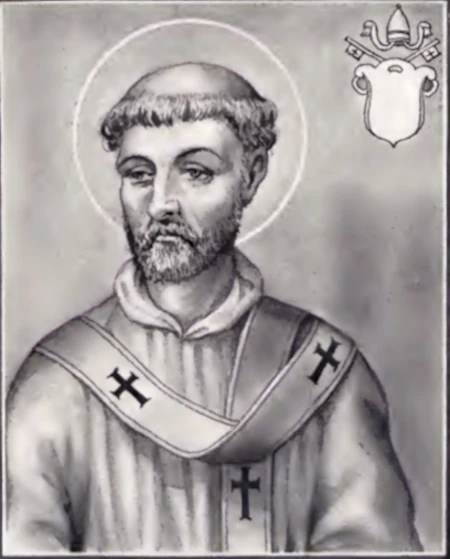
Pope Saint Hyginus, the eighth Bishop of Rome, held the Chair of Peter from approximately 136 to 140 AD. His relatively short pontificate occurred during a period when the early Church was actively defining its doctrines and practices amidst external pressures.
Guiding the Church Through Doctrinal FormationHyginus's papacy coincided with the emergence of various *heresies*, particularly Gnosticism, which posed a significant challenge to the Church's teachings. *His primary focus was to defend and clarify the authentic Christian message against these deviations, emphasizing the importance of adhering to apostolic tradition*.
Combating HeresiesGnosticism, with its complex and often esoteric beliefs, threatened to undermine the core tenets of Christianity. *Hyginus actively refuted Gnostic teachings, affirming the goodness of creation, the reality of Christ's incarnation, and the importance of both faith and good works for salvation*. By standing firm against heresy, he helped to preserve the integrity of the Church's message and safeguard the faith of its members.
Contributions to Church GovernanceWhile specific details are scarce, some traditions attribute certain organizational measures to Hyginus. *He is said to have more clearly defined the roles and responsibilities within the clergy, further establishing the hierarchical structure of the Church*. Such measures would have been essential for maintaining order and ensuring effective pastoral care within the growing Christian community.
Facing Challenges in RomeDuring Hyginus's reign, the Church in Rome continued to face challenges from both the Roman authorities and internal divisions. *While the extent of persecution during his pontificate is not fully documented, it's likely that he provided leadership and encouragement to Christians facing hostility and discrimination*. His ability to maintain unity and stability within the Church would have been crucial during these difficult times.
Martyrdom and RemembranceSaint Hyginus is honored as a martyr, although the precise circumstances of his death are uncertain [Pope St. Pius I - The 10th Pope - PopeHistory.com](https://popehistory.com/popes/pope-st-pius-i/). His feast day is celebrated on January 11th [Pope St. Pius I - The 10th Pope - PopeHistory.com](https://popehistory.com/popes/pope-st-pius-i/).
A Legacy of Doctrinal PurityAlthough details about his life and papacy are limited, Pope Saint Hyginus left a lasting legacy as a defender of the faith. *His efforts to combat heresy and strengthen Church governance contributed to the stability and growth of the early Christian community*. As Catholics, we can draw inspiration from his example of doctrinal clarity and unwavering commitment to the truth.
"Guard what has been entrusted to your care. Turn away from godless chatter and the opposing ideas of what is falsely called knowledge." (1 Timothy 6:20)
The Ninth Bishop of RomePope Saint Hyginus occupies a venerable place in Catholic tradition as the ninth Bishop of Rome, succeeding Pope Saint Telesphorus and preceding Pope Saint Pius I. His pontificate is traditionally dated from approximately 138 to 142 AD, during the early years of Emperor Antoninus Pius's reign. Though his papacy was relatively brief, lasting only about four years, Hyginus made significant contributions to the developing structures and teachings of the early Church during a period of both growth and challenge.
A Philosopher Called to Shepherd God's PeopleAccording to ancient tradition preserved in the Liber Pontificalis, Hyginus was Greek by birth and had previously been a philosopher in Athens before his call to serve the Church in Rome. This intellectual background would have provided him with valuable skills for addressing the theological challenges facing the Christian community during the mid-second century.
His transition from philosophical inquiry to spiritual leadership represents the fruitful integration of faith and reason that would become a hallmark of Catholic intellectual tradition. Unlike some philosophical schools that set reason against revelation, the Catholic approach exemplified by Hyginus recognizes that properly used reason illuminates and deepens faith rather than undermining it.
Confronting Heretical TeachingsThe pontificate of Hyginus coincided with the arrival in Rome of two significant heretical teachers whose doctrines threatened to undermine the apostolic faith: Valentinus and Cerdo, both proponents of various forms of Gnosticism. These complex systems typically claimed special secret knowledge (gnosis), denigrated the material world as evil, denied Christ's true incarnation, and rejected the God of the Old Testament.
While no writings of Hyginus directly addressing these errors have survived, historical sources indicate that he took decisive action to preserve orthodox teaching. According to Saint Irenaeus, writing just decades later, Hyginus personally confronted Cerdo about his errors, demonstrating the early papacy's role in safeguarding doctrinal integrity.
The fact that both Valentinus and Cerdo initially operated within the Christian community before their errors became fully apparent presented a particular challenge. Hyginus showed discernment in distinguishing legitimate theological exploration from dangerous departure from apostolic teaching—a skill that remains essential for Church leadership in every age.
Establishing Church GovernanceTradition attributes to Hyginus several important developments in ecclesiastical organization:
He is credited with establishing a formal hierarchical structure for the clergy, more clearly defining the roles of various ministers He reportedly instituted the practice of having godparents at baptism, ensuring proper instruction and accountability in the Christian formation of new believers Some sources suggest he formalized regulations regarding the consecration of churches and the dedication of sacred spacesThese organizational developments reflect the Catholic understanding that proper governance structures are not merely administrative conveniences but sacramental signs that embody theological truths. The hierarchical ordering of ministry, for instance, manifests the ordered nature of God's creation and the distinct yet complementary roles within the Body of Christ.
The Significance of GodparentsThe institution of godparents (sponsors) at baptism represents a profound insight into the communal nature of Christian faith. By establishing this practice, Hyginus recognized that new Christians needed personal accompaniment and mentorship beyond just formal instruction. Faith is transmitted not only through teaching but through relationships within the community of believers.
This practice, which continues in Catholic baptismal ceremonies today, embodies the Church's understanding that we are not isolated individuals on our spiritual journey but members of a community responsible for one another's growth in faith. When modern parents and godparents make promises at a child's baptism, they participate in a tradition that stretches back nearly two millennia to Pope Hyginus.
A Time of TransitionHyginus guided the Church during a significant transitional period. Christianity was spreading beyond its Jewish roots and engaging more deeply with Greco-Roman culture, while simultaneously working to preserve its distinct identity and authentic teaching. As a Greek philosopher who became Bishop of Rome, Hyginus personally embodied this creative engagement between faith and culture.
During this period, the Church was also transitioning from primarily house churches to more established structures as the Christian population grew. Hyginus's regulations regarding sacred spaces likely reflected this development, ensuring that even as worship moved from intimate domestic settings to larger gatherings, proper reverence and liturgical dignity would be maintained.
Defining the Easter CelebrationSome historical sources suggest that during Hyginus's papacy, the debate over the proper date for celebrating Easter (the Quartodeciman controversy) continued to develop. The Roman practice of celebrating Easter on Sunday, rather than on the 14th day of the Jewish month of Nisan regardless of the day of the week, was becoming more firmly established as normative for the Western Church.
While this controversy would not reach its climax until later decades, Hyginus likely contributed to establishing the theological rationale for the Sunday celebration—emphasizing that the Lord's Resurrection should be commemorated on the Lord's Day. This early expression of papal authority in liturgical matters demonstrates how the Bishop of Rome was already recognized as having a special responsibility for maintaining unity in essential practices.
Martyrdom Debated but Holiness AffirmedUnlike his predecessor Telesphorus, whose martyrdom is explicitly attested by Saint Irenaeus, the historical evidence regarding Hyginus's death is less clear. While some later traditions include him in the list of martyred popes, contemporary historical scholarship considers this uncertain.
Regardless of the manner of his death, the Church venerates Hyginus as a saint whose holy leadership guided the Christian community through challenging times. The Roman Martyrology commemorates his feast day on January 11th. His sanctity is recognized not primarily for a dramatic martyrdom but for his faithful service and defense of orthodox teaching against emerging heresies.
Buried Near the Prince of ApostlesAccording to tradition, Hyginus was buried near the tomb of Saint Peter on Vatican Hill, joining his predecessors in death just as he had followed them in the apostolic office. This burial location symbolizes the profound connection between the early popes and their predecessor, the Prince of the Apostles, physically embodying the continuity of papal authority from Peter himself.
When pilgrims today visit St. Peter's Basilica, they stand near the resting place of these faithful successors to Peter, including Hyginus. This physical proximity serves as a tangible reminder of the unbroken succession that connects contemporary Catholicism to its apostolic foundations.
A Link in the Chain of SuccessionPerhaps Hyginus's greatest significance lies in his place within the unbroken succession of Roman pontiffs. The Catholic Church cherishes this lineage as a visible sign of Christ's abiding presence with His Church and the fulfillment of His promise that "the gates of hell shall not prevail against it" (Matthew 16:18).
As the ninth successor to Saint Peter, Hyginus helped establish the pattern of orderly succession that would safeguard doctrinal continuity throughout the centuries. Each early pope, receiving and transmitting the deposit of faith, formed a crucial link in the chain connecting modern Catholicism to its apostolic foundations.
The Challenge of Historical DistanceFor modern Catholics, figures like Pope Hyginus can seem distant, with limited historical details available about their lives and specific contributions. Yet this very distance serves as a reminder of an important theological truth: the Church's continuity depends not primarily on extensive documentation or the personal charisma of individual leaders, but on the Holy Spirit's guidance of the entire community of faith through time.
The relative paucity of biographical information about early popes like Hyginus actually highlights the supernatural character of apostolic succession. What matters most is not the full preservation of every historical detail, but the faithful transmission of the deposit of faith from generation to generation under the Spirit's guidance.
Authority Through ServiceThough details are limited, what we know of Hyginus suggests a leader who exercised authority not for personal aggrandizement but for service to the community and protection of authentic teaching. This model of servant leadership established by Christ Himself and exemplified by the early popes continues to inspire the Church's understanding of religious authority.
Unlike worldly power that often seeks dominance, ecclesiastical authority as modeled by figures like Hyginus exists for the building up of the community and the safeguarding of the truth entrusted to the Church. His confrontation with heretical teachers was not about imposing personal opinions but preserving the faith once delivered to the saints.
Guardian Against Proto-GnosticismThe theological challenges Hyginus faced were particularly subtle and dangerous. Gnostic teachers like Valentinus often used Christian terminology and claimed to offer a deeper, more spiritual understanding of Christ's message. Their seemingly profound systems, with elaborate cosmologies and promises of special insight, attracted many educated converts.
Hyginus demonstrated spiritual discernment in recognizing how these teachings, despite their intellectual appeal, undermined essential Christian truths about creation, incarnation, and redemption. His defense of orthodox teaching preserved the incarnational realism that lies at the heart of Catholic faith—the conviction that God truly became flesh in Jesus Christ and that material creation, far from being evil, is capable of bearing divine presence and meaning.
A Legacy of IntegrationAs a philosopher who became pope, Hyginus embodies the Catholic principle that faith and reason, properly understood, are complementary rather than contradictory. This integration would later be more fully articulated by thinkers like Thomas Aquinas, but its seeds were planted in the early Church's engagement with Greek philosophical traditions.
Unlike approaches that either reject reason in favor of blind faith or elevate human reason above divine revelation, the Catholic tradition exemplified by Hyginus recognizes that both are gifts from God that, when properly aligned, lead to fuller understanding of truth. This balanced approach continues to characterize authentic Catholic intellectual life.
"What you heard from me, keep as the pattern of sound teaching, with faith and love in Christ Jesus. Guard the good deposit that was entrusted to you—guard it with the help of the Holy Spirit who lives in us." (2 Timothy 1:13-14)
Please or Login to leave Comments