Pope Saint Fabian
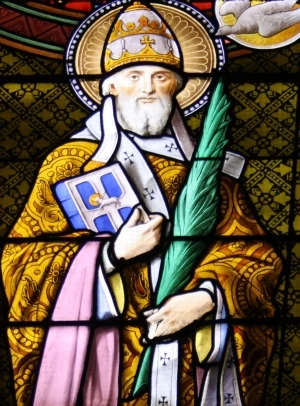
Among the remarkable stories of papal history, few capture the imagination quite like that of Pope Saint Fabian, whose election in 236 AD is remembered as one of the most extraordinary examples of divine providence in Church history. His fourteen-year pontificate, spanning from 236 to 250 AD, stands as a testament to how God can use the most unexpected circumstances to accomplish His greatest works. Saint Fabian's story reminds us that the Holy Spirit often chooses instruments that confound human wisdom, elevating the humble to positions of profound influence in building God's kingdom.
The Miraculous Election: When Heaven IntervenesThe circumstances surrounding Pope Saint Fabian's election remain one of the most beloved accounts in early Church history. Following the martyrdom of Pope Saint Anterus in January 236 AD, the Roman Christian community faced the daunting task of selecting a new leader during a period of ongoing persecution under Emperor Maximinus Thrax. The clergy and faithful gathered to deliberate on potential candidates, considering various worthy men who might be capable of leading the Church through these dangerous times.
According to the account preserved by the historian Eusebius of Caesarea, Fabian was not among the candidates being seriously considered. He was a layman who had come from the countryside simply to observe the proceedings, perhaps to witness this important moment in the Church's life without any expectation of personal involvement. Yet as the assembly prayed and deliberated, something extraordinary occurred that would forever change the course of Church history.
A dove suddenly appeared and alighted directly upon Fabian's head, remaining there in a manner that struck all present as unmistakably supernatural. The assembled Christians immediately recognized this as a clear sign of divine election, recalling how the Holy Spirit had descended upon Jesus at His baptism in the form of a dove. The symbolism was too powerful and obvious to ignore – God Himself was indicating His choice for the papal office.
The response of the Christian community was immediate and unanimous. Despite Fabian's status as a layman and his apparent lack of ecclesiastical preparation for such high office, the assembly acclaimed him as their new bishop. This remarkable episode demonstrates the early Church's profound sensitivity to divine providence and their willingness to trust God's wisdom even when it contradicted human expectations.
From Layman to Leader: A Rapid TransformationThe elevation of a layman to the papal office required immediate attention to his ecclesiastical preparation. In the early Church, it was not uncommon for individuals to advance quickly through the clerical ranks when circumstances demanded it, but Fabian's situation was particularly dramatic. He would have needed to receive the various orders of ministry – deacon, priest, and finally bishop – in rapid succession.
This process, while expedited by necessity, was not merely ceremonial. Each stage of ordination carried with it specific spiritual graces and responsibilities that prepared Fabian for his ultimate role as Bishop of Rome. The Church's confidence in proceeding with these ordinations so quickly after his miraculous selection demonstrates their absolute conviction that God had truly chosen this man for leadership.
Fabian's rapid advancement from layman to pope also speaks to his personal character and spiritual maturity. The Christian community would not have proceeded with such an extraordinary elevation unless they had quickly recognized in him the qualities necessary for papal leadership: deep faith, pastoral wisdom, administrative capability, and the courage required to guide the Church through ongoing persecution.
Administrative Genius: Organizing the Church for GrowthOnce established in the papal office, Pope Saint Fabian demonstrated remarkable administrative and organizational abilities that would transform the structure of the Roman Church for centuries to come. His most significant innovation was the reorganization of the Roman clergy and the establishment of a more systematic approach to Church governance that would serve as a model for ecclesiastical administration throughout the Christian world.
Fabian divided the city of Rome into seven ecclesiastical districts, each overseen by a deacon who was responsible for both liturgical duties and charitable works within his assigned area. This system ensured more effective pastoral care for the growing Christian population while also creating a more efficient network for distributing aid to the poor, widows, and orphans – a crucial aspect of early Christian ministry.
He also established a more systematic approach to the ordination and assignment of clergy, ensuring that the Church's pastoral needs were met even as the Christian population continued to grow throughout the city. His organizational reforms demonstrated a remarkable ability to balance spiritual leadership with practical administration, understanding that effective pastoral care required both inspired vision and competent management.
These administrative innovations were particularly significant given the challenging circumstances under which the Church operated. The constant threat of persecution meant that Church structures needed to be both effective and resilient, capable of continuing their mission even when individual leaders might be arrested or martyred. Fabian's organizational genius provided exactly this kind of stability and continuity.
The Peaceful Years: Church Growth Under Imperial ToleranceOne of the most remarkable aspects of Pope Saint Fabian's pontificate was the period of relative peace that characterized most of his fourteen-year reign. Following the death of Emperor Maximinus Thrax in 238 AD, the Roman Empire entered a period of greater tolerance toward Christianity that allowed the Church to experience unprecedented growth and development.
During these peaceful years, Fabian was able to focus on positive development rather than mere survival. The Church experienced significant numerical growth as the Gospel message spread throughout Roman society. Christian communities expanded not only in Rome but throughout the Empire, requiring increased coordination and support from the papal office.
This period of growth also allowed for important theological and liturgical developments. Fabian supported scholarly work that helped clarify Christian teaching and combat various heresies that threatened to distort the Gospel message. The relative peace also enabled the development of more elaborate liturgical practices and the construction of places of worship that could accommodate the growing Christian population.
Perhaps most significantly, the peaceful years of Fabian's pontificate allowed the Church to develop a stronger institutional foundation that would prove crucial during future periods of persecution. The administrative structures he established, the clergy he ordained, and the Christian communities he nurtured would provide the stability needed to weather the severe trials that lay ahead.
Missionary Vision: Expanding the Church's ReachPope Saint Fabian demonstrated a remarkable missionary vision that extended far beyond the boundaries of Rome itself. Understanding that the Gospel was meant for all nations, he actively supported and organized missionary efforts that would spread Christianity throughout the known world. His pontificate marked a significant expansion of the Church's geographical reach and cultural influence.
One of his most significant missionary initiatives was the sending of seven bishops to establish Church communities in Gaul (modern-day France). This mission, led by figures who would themselves become saints – including Saint Dionysius of Paris, Saint Martial of Limoges, and Saint Saturninus of Toulouse – represented a systematic effort to plant the Church in new territories rather than simply responding to spontaneous evangelization efforts.
These missionary bishops faced enormous challenges in establishing Christian communities in regions where the Gospel was largely unknown. They had to learn new languages, adapt to different cultures, and often face hostility from both religious and political authorities. Yet their success in founding lasting Christian communities demonstrates both their personal courage and the effectiveness of Fabian's strategic planning.
The missionary expansion during Fabian's pontificate also reflected his understanding of the Church's universal mission. Rather than focusing exclusively on strengthening existing Christian communities, he recognized the imperative to share the Gospel with those who had not yet heard it. This missionary vision would become a defining characteristic of the Catholic Church throughout its history.
Care for Martyrs: Honoring the Ultimate WitnessOne of Pope Saint Fabian's most touching pastoral initiatives was his careful attention to honoring and preserving the memory of Christian martyrs. Understanding that these heroes of faith served as powerful examples and intercessors for the living Church, he organized systematic efforts to recover their remains, provide proper burial, and maintain their memorial sites.
Fabian personally arranged for the return of the bodies of his predecessors, Pope Saint Pontian and Saint Hippolytus, from their exile in Sardinia. This gesture demonstrated both his reverence for their sacrifice and his understanding of the importance of maintaining continuity with the Church's heroic past. The proper burial of these martyred leaders provided the Roman Christian community with tangible connections to their brave predecessors.
He also supported the development and maintenance of the Roman catacombs, the underground burial complexes that served as both cemeteries and places of veneration for Christian martyrs. These sites became crucial gathering places for Christian worship and community during times of persecution, and Fabian's attention to their development showed remarkable foresight about their future importance.
The care shown for martyrs during Fabian's pontificate reflected the early Church's deep understanding of the communion of saints – the spiritual connection between the living and the dead in Christ. By honoring those who had given their lives for the faith, he encouraged contemporary Christians to remain faithful even in the face of potential persecution.
The Return of Persecution: Facing the Final TestThe peaceful years of Pope Saint Fabian's pontificate came to an abrupt end with the accession of Emperor Decius in 249 AD. Unlike previous persecutions that had been sporadic or locally focused, Decius launched a systematic, empire-wide campaign designed to eliminate Christianity entirely. This persecution was more thorough and devastating than anything the Church had previously experienced.
Decius understood that previous persecutions had failed because they focused primarily on dramatic public executions that often served to inspire rather than discourage Christian faith. His approach was more subtle and comprehensive, requiring all citizens to obtain certificates proving they had sacrificed to the Roman gods. This system made it virtually impossible for Christians to avoid compromising their faith while remaining within Roman society.
The Decian persecution presented Pope Saint Fabian with the ultimate test of his leadership. The administrative structures he had so carefully built were now under systematic attack, with clergy and lay leaders being specifically targeted for arrest and execution. The peaceful years of growth and development were suddenly replaced by a struggle for the Church's very survival.
Fabian's response to this crisis demonstrated the depth of his pastoral commitment and personal courage. Rather than fleeing Rome or seeking accommodation with imperial authorities, he remained at his post, continuing to provide spiritual leadership to his flock even as the dangers mounted. His presence in Rome during these dark days provided crucial encouragement to Christians facing their own tests of faith.
Martyrdom: The Crown of Faithful ServicePope Saint Fabian's pontificate reached its climax on January 20, 250 AD, when he became one of the first victims of the Decian persecution. Historical accounts suggest that he was arrested and died in prison, likely from the harsh conditions of his confinement rather than through public execution. His death marked the end of one of the most significant papal reigns in early Church history.
The circumstances of Fabian's martyrdom reflected the systematic nature of Decius's persecution. Rather than seeking to create dramatic public spectacles, the emperor aimed to eliminate Christian leadership quietly but effectively. Fabian's death in prison demonstrated that he had refused to compromise his faith even when facing the choice between apostasy and death.
His martyrdom was mourned throughout the Christian world, but it also served as a powerful witness to the faith that had sustained him throughout his remarkable pontificate. The man who had been chosen by a dove's miraculous intervention completed his earthly ministry by offering his life for the Gospel he had served so faithfully.
The impact of Fabian's death extended far beyond Rome itself. The missionary churches he had established in Gaul and elsewhere faced their own persecutions, but they drew strength from the example of their founder's ultimate sacrifice. His martyrdom became a source of inspiration for Christians throughout the Empire who were facing similar tests of faith.
Legacy and Continuing InfluencePope Saint Fabian's influence on the Church extended far beyond his fourteen-year pontificate. The administrative structures he established provided a foundation for Church governance that would be developed and refined by his successors. His missionary vision contributed to the eventual Christianization of Western Europe, while his care for martyrs helped establish traditions of veneration that continue to this day.
His feast day, celebrated on January 20th, provides an annual opportunity for Catholics to reflect on the remarkable ways in which God calls and equips those He chooses for leadership. The story of his miraculous election continues to inspire believers to trust in divine providence even when God's ways seem to contradict human wisdom.
Perhaps most importantly, Saint Fabian's example demonstrates that authentic Christian leadership always culminates in self-sacrifice. From his unexpected election to his final martyrdom, his life testified to the truth that those who would serve Christ must be prepared to give everything for His Gospel. This witness remains as relevant today as it was in the third century, challenging contemporary Catholics to embrace the same spirit of faithful service regardless of the cost.
Please or Login to leave Comments