Pope Saint Callistus I
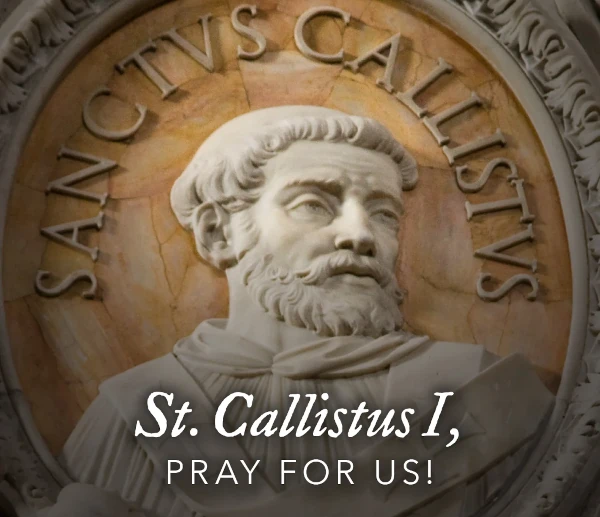
In the annals of Church history, few pontiffs exemplify the transformative power of divine mercy quite like Pope Saint Callistus I. Serving as the Bishop of Rome from approximately 217 to 222 AD, this remarkable saint's life journey from slave to supreme pontiff stands as a testament to God's boundless grace and the Church's capacity for forgiveness and renewal.
From Bondage to Freedom: A Life TransformedThe early life of Callistus reveals the extraordinary ways in which God can work through human frailty. Born into slavery in the late second century, Callistus faced circumstances that would have discouraged many from pursuing holiness. His master, Carpophorus, a Christian, entrusted him with establishing a bank to serve the Christian community in Rome. When financial difficulties arose and Callistus fled, it appeared his story might end in disgrace.
Yet this apparent failure became the crucible in which his character was forged. Captured and imprisoned, Callistus experienced firsthand the weight of human judgment and the profound need for mercy. This personal encounter with suffering and redemption would later inform his pastoral approach as Pope, making him uniquely qualified to shepherd souls who had themselves stumbled and sought forgiveness.
The Wisdom of Pope ZephyrinusCallistus's path to the papacy was paved through his faithful service under Pope Zephyrinus, who recognized the former slave's exceptional spiritual gifts and administrative acumen. Zephyrinus appointed Callistus as his deacon and entrusted him with the oversight of the Christian cemetery on the Appian Way, which would later bear his name as the Catacombs of San Callisto.
This responsibility was far more than administrative; it represented a profound trust in Callistus's spiritual maturity and pastoral heart. The catacombs served as sacred spaces where Christians gathered to honor their deceased and celebrate the Eucharist, making Callistus a guardian of some of the most precious aspects of early Christian worship and community life.
A Papacy of Mercy and Pastoral WisdomWhen Callistus ascended to the Chair of Peter, he brought with him a deep understanding of human weakness and God's abundant mercy. His pontificate was marked by several groundbreaking pastoral decisions that reflected his commitment to the Gospel's inclusive message while maintaining doctrinal integrity.
Perhaps most significantly, Pope Callistus established more lenient policies regarding the reconciliation of sinners who had committed grave offenses, including adultery and apostasy. In an era when many believed such sins were unforgivable after baptism, Callistus courageously proclaimed that the Church's doors should remain open to all who genuinely repented. This position, rooted in Christ's own ministry to sinners and outcasts, demonstrated remarkable pastoral foresight and evangelical courage.
His approach to marriage also reflected this pastoral sensitivity. Callistus recognized marriages between Christian women of noble birth and Christian men of lower social status, including freed slaves, at a time when Roman law prohibited such unions. This decision affirmed the fundamental equality of all Christians before God and challenged the social hierarchies that contradicted Gospel values.
Defender of Orthodox FaithWhile Callistus is remembered for his mercy, he was equally steadfast in defending orthodox Catholic teaching against heretical movements that threatened the Church's unity and doctrinal purity. He confronted the Modalist heresy, which denied the distinct persons of the Trinity, and the rigorist movement led by Hippolytus, which sought to exclude repentant sinners from the Church permanently.
Callistus's approach to these challenges demonstrated the delicate balance required of authentic Catholic leadership: unwavering commitment to revealed truth coupled with pastoral compassion for struggling souls. He understood that true mercy never compromises truth but rather creates space for truth to transform hearts through love.
The Martyr's CrownPope Saint Callistus's earthly journey concluded around 222 AD when he received the crown of martyrdom. According to tradition, during a period of popular unrest against Christians, he was thrown from a window and killed by an angry mob. His death sealed with blood the testimony of his life: that Christ's love is stronger than human hatred, and that the Gospel's power to transform lives is worth any sacrifice.
The manner of his martyrdom—killed not through official imperial persecution but by mob violence—reflected the ongoing tensions between the growing Christian community and Roman society. Yet even in death, Callistus embodied the Christian virtue of forgiveness, following his Master's example of praying for those who persecuted him.
Legacy and Lessons for TodaySaint Callistus's legacy extends far beyond his brief pontificate. The Catacombs of San Callisto remain one of Rome's most important archaeological and spiritual sites, containing the tombs of numerous early Christian martyrs and popes. These underground chambers continue to witness to the faith that Callistus helped nurture and protect.
More importantly, his pastoral approach offers timeless lessons for the Church today. In an era when the tension between truth and mercy often seems irreconcilable, Saint Callistus demonstrates that authentic Catholic leadership requires both doctrinal fidelity and pastoral compassion. His willingness to welcome repentant sinners while maintaining orthodox teaching provides a model for addressing contemporary pastoral challenges.
His life also reminds us that God's grace can transform any circumstance. From slavery to the papacy, from financial failure to spiritual leadership, Callistus's journey illustrates the truth that our past mistakes need not define our future if we surrender ourselves to God's mercy and providence.
Death and Legacy
The circumstances surrounding Callistus' death are uncertain. It is possible he was martyred during a popular uprising or murdered. Legend says that he was thrown into a well.
Despite the lack of definitive details about his death, Callistus' legacy as a compassionate and capable leader remains strong. His life story, from slave to Pope, is a testament to the transformative power of faith and the boundless mercy of God. Some of his relics rest in the reliquary chapel at the Basilica of the Sacred Heart on Notre Dame’s campus.
Pope Saint Callistus I stands as a beacon of hope for all who have experienced failure, rejection, or despair. His life proclaims that no one is beyond God's reach, no sin is greater than divine mercy, and no circumstance can prevent the Holy Spirit from working through surrendered hearts.
As we face the challenges of modern Church life, Saint Callistus's example encourages us to embrace both truth and mercy, to welcome the struggling while upholding the Gospel's demands, and to trust that God's grace can transform even our greatest failures into instruments of His glory. In honoring this remarkable saint, we celebrate not only his individual holiness but the Church's perennial mission to be a field hospital for wounded souls seeking healing and hope.
Feast Day: October 14
Please or Login to leave Comments