Pope Saint Urban I
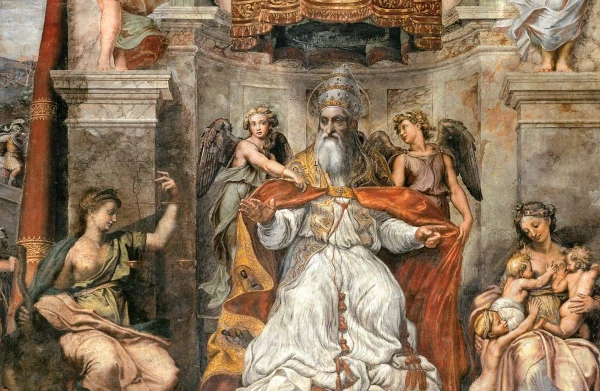
In the annals of Church history, few pontificates were as challenging yet transformative as that of Pope Saint Urban I, who led the Catholic Church from 222 to 230 AD. During an era when Christianity faced relentless persecution under the Roman Empire, Urban emerged as a beacon of faith, courage, and pastoral wisdom that would help shape the Church's foundation for centuries to come.
The Man Behind the PapacyUrban I ascended to the Chair of Peter during the reign of Emperor Alexander Severus, a period marked by relative calm before the storms of persecution that would follow. Born in Rome, Urban brought a deep understanding of both the local Christian community and the broader challenges facing the universal Church. His Roman heritage proved invaluable as he navigated the complex political and social landscape of the imperial capital while remaining steadfast in his commitment to Gospel values.
What distinguished Urban from the outset was his remarkable ability to balance prudence with boldness. While many of his predecessors had focused primarily on survival during times of persecution, Urban recognized that the Church needed to do more than merely endure—it needed to grow, organize, and prepare for the future. His eight-year pontificate would prove that even in the most challenging circumstances, the Church could flourish under inspired leadership.
Liturgical Innovations and Spiritual LeadershipOne of Urban's most enduring contributions to the Catholic Church was his development and refinement of liturgical practices that remain influential to this day. He is credited with establishing important precedents regarding the celebration of the Eucharist, particularly emphasizing the sacred vessels used in Mass. His decree that sacred vessels be made of precious metals—gold or silver—reflected not mere luxury but a profound theological understanding of the Real Presence of Christ in the Eucharist.
This attention to liturgical detail stemmed from Urban's deep conviction that how we worship reflects what we believe. By insisting on the dignity and beauty of liturgical celebrations, he helped establish principles that would guide Catholic worship for millennia. His innovations were not arbitrary additions but thoughtful developments that enhanced the Church's ability to express its most sacred mysteries through beautiful and reverent ritual.
Urban also promoted the use of sacred chrism in various sacramental celebrations, understanding that the physical elements of worship serve as bridges between the earthly and the divine. These contributions demonstrate his sophisticated theological mind and his practical wisdom in helping the faithful encounter God through carefully crafted liturgical experiences.
Pastoral Care and Community BuildingBeyond liturgical innovations, Urban demonstrated exceptional pastoral sensitivity during his tenure. He understood that the early Christian communities needed strong leadership to maintain unity and grow in faith despite external pressures. His approach to pastoral care emphasized both doctrinal clarity and compassionate understanding of human struggles.
Under Urban's leadership, the Roman Church developed more sophisticated systems for caring for widows, orphans, and the poor—reflecting the Gospel mandate to care for the most vulnerable. He recognized that Christian witness required not just correct belief but active charity, and he worked tirelessly to ensure that the Church's resources were directed toward those most in need.
His pastoral letters, while not extensively preserved, reveal a leader deeply concerned with the spiritual formation of both clergy and laity. Urban understood that the Church's growth depended not merely on numbers but on the depth of faith and commitment among its members. He invested significant energy in developing educational programs and spiritual formation opportunities that would strengthen the Christian community from within.
Courage Under PressurePerhaps Urban's most admirable quality was his courage in the face of ongoing persecution. While his pontificate occurred during a relatively peaceful period, the threat of renewed persecution always loomed large. Urban's response was neither fearful retreat nor reckless provocation, but rather a steady, confident proclamation of the Gospel that inspired both his contemporaries and future generations.
He understood that true courage in Christian leadership meant being willing to speak truth regardless of consequences while also exercising the prudence necessary to protect the faithful entrusted to his care. This delicate balance required both spiritual discernment and practical wisdom—qualities that Urban possessed in abundance.
His martyrdom in 230 AD stands as the ultimate testament to his courage. Rather than compromise his faith or abandon his flock when persecution intensified, Urban chose to face death rather than betray the Gospel he had proclaimed so faithfully. This supreme sacrifice transformed him from an admired leader into a venerated saint whose example continues to inspire Catholics worldwide.
Legacy and Contemporary RelevanceThe impact of Saint Urban I extends far beyond his eight-year pontificate. His liturgical innovations helped establish patterns of worship that enhanced the Church's ability to celebrate its most sacred mysteries with appropriate dignity and beauty. His pastoral approaches created models for caring leadership that remain relevant for Church leaders today.
Perhaps most importantly, Urban's example demonstrates how authentic Christian leadership can flourish even under the most challenging circumstances. His ability to balance innovation with tradition, courage with prudence, and pastoral care with administrative excellence provides a template for effective Church leadership in any era.
For contemporary Catholics, Saint Urban I offers inspiration and guidance in several key areas. His commitment to liturgical excellence reminds us that our worship should reflect the glory and majesty of God while remaining accessible to all believers. His pastoral sensitivity shows us the importance of meeting people where they are while calling them to deeper faith. His courage under persecution encourages us to remain faithful to Gospel values even when doing so proves costly.
ConclusionPope Saint Urban I stands as one of the great figures of the early Church, a leader whose vision, courage, and pastoral wisdom helped establish foundations that continue to support Catholic faith and practice today. His life reminds us that even in the darkest times, God raises up leaders capable of guiding His people forward with hope and confidence.
As we face our own challenges in the modern world, the example of Saint Urban I calls us to embrace both the beauty of our liturgical traditions and the demands of authentic Christian living. His feast day on May 25th provides an annual opportunity to remember not just a historical figure, but a saint whose intercession and example can guide us in our own journey of faith.
In Saint Urban I, we find not just an ancient pope, but a timeless model of Christian leadership that speaks powerfully to every generation of believers.
Please or Login to leave Comments